01 / THE PATIENT ARRIVES
The apparent problem was not the complete diagnosis.
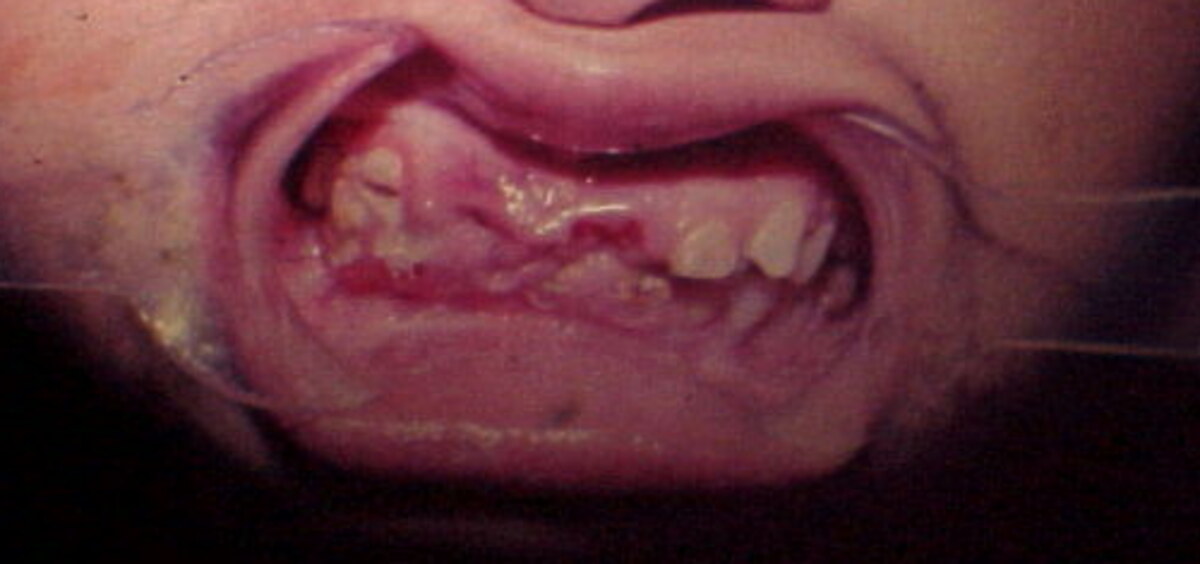
A seven-year-old child was presented during a weekly departmental case discussion with gingival synechia and inability to open the mouth. Professor Lasco interpreted the synechia as a consequence rather than the primary disorder. His revised diagnosis was bilateral temporomandibular joint ankylosis attributed in the published account to birth trauma.
The limited mandibular movement had persisted through the transition from deciduous to permanent dentition. This offered a clinical explanation for the abnormal gingival union described in the surviving account.
02 / DIAGNOSTIC REASONING
From visible consequence to joint pathology.
The central teaching point was diagnostic revision. Treating the gingival tissue alone would not address the mechanical restriction at both joints. The case was reframed around mandibular immobility, facial growth and the need to restore a functional opening.
The published historical account does not provide the complete examination, imaging set, measurements or original chart. This reconstruction does not invent those details.
03 / THE DECISION AND OPERATION
Create movement, preserve bone contact and avoid an implanted interposition.
The operative plan used bilateral horizontal osteotomies of the mandibular ramus. The anterior segment included the condyle and coronoid process. A complementary osteotomy of the posterior segment was described in relation to the mandibular dental arch. Two triangular bone portions were removed so that the remaining segments met at an apex.
The purpose was to establish a bilateral mandibular pseudoarthrosis, an innovative functional articulation without biomaterial. The historical article presents this as the selected solution for the anatomy and resources of the period.
04 / REHABILITATION AND EARLY RESULT
Physiotherapy was part of the operation.
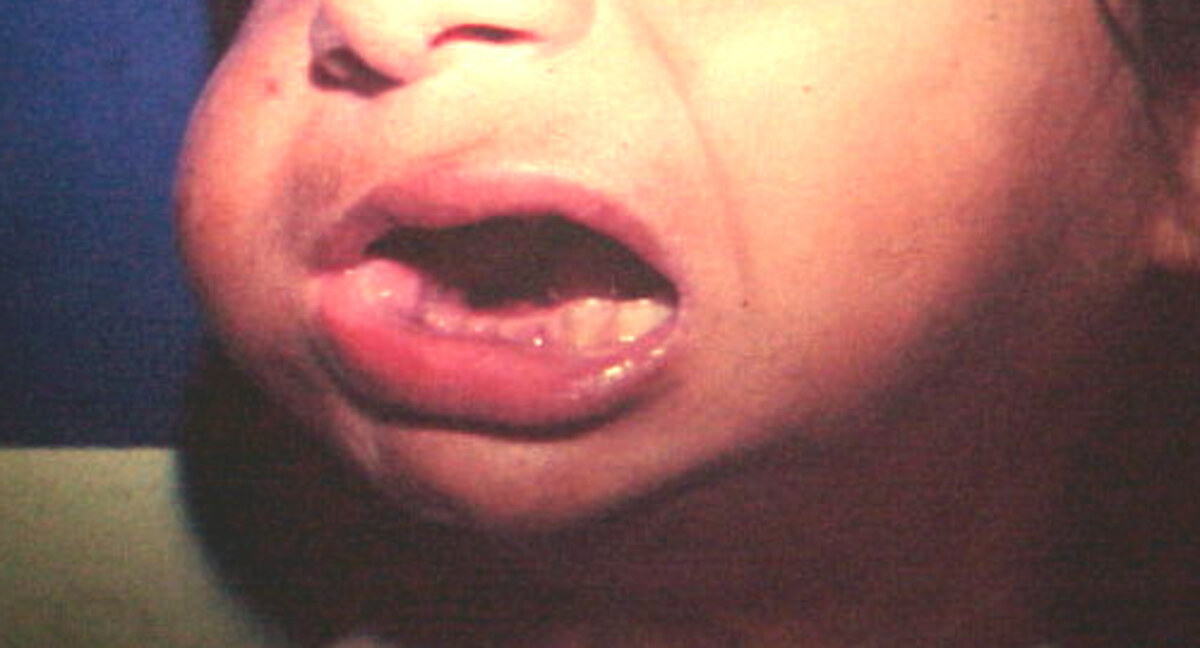
Mouth-opening physiotherapy began immediately after surgery and was prescribed three times daily for three months. The published photograph at 21 days records a markedly improved oral opening. The available article does not supply a numeric measurement or longer individual follow-up, so no additional outcome is claimed here.
05 / WHY THIS CASE MATTERS
A clinical decision that helped define a specialty.
In Carlos A. Andreucci's historical account, this case helped demonstrate Professor Lasco's diagnostic and surgical contribution within Otorhinolaryngology at the University of São Paulo. It forms part of the path that led to the establishment of Oral and Maxillofacial Surgery training in the service during the early 1960s.
Read today, the case is valuable for its sequence: question the presenting label, identify the functional cause, design treatment around available anatomy and make rehabilitation inseparable from surgery. It is a historical educational record, not a current treatment recommendation.